One Search, Five Databases: How Academic Search Works
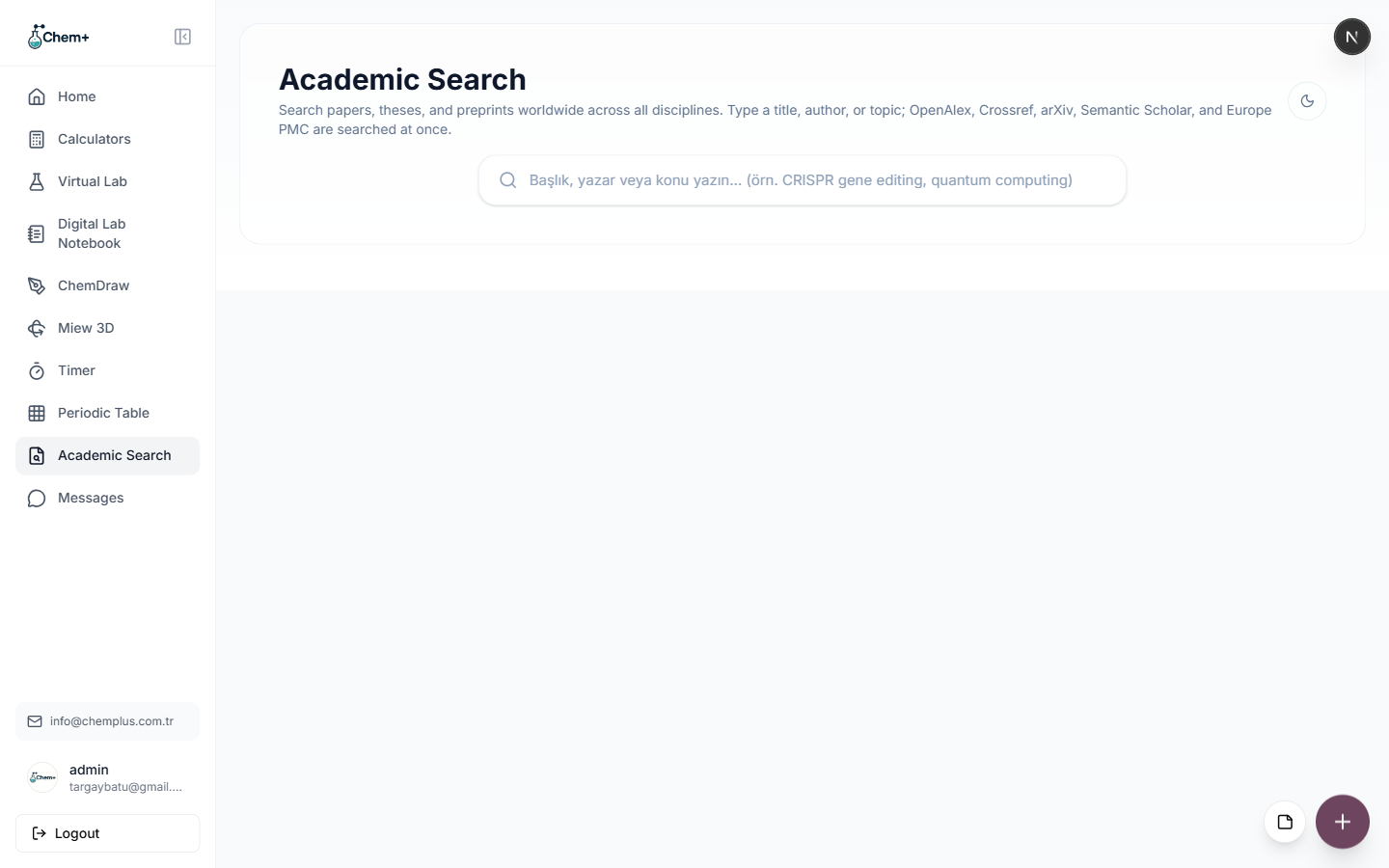
Literature review has a hidden tax: no single database has everything, so a thorough search means running the same query across several of them, then reconciling the results by hand. Academic Search removes that tax by querying five sources at once and bringing the results back together.
The five sources
Each database has a different center of gravity, and together they cover a lot of ground:
- OpenAlex — a broad, open index of scholarly works across disciplines.
- Crossref — the registry behind DOIs, strong for published journal articles.
- arXiv — preprints, especially in the physical sciences, often months ahead of formal publication.
- Semantic Scholar — adds citation context and relevance signals.
- Europe PMC — deep coverage of the life sciences and biomedical literature.
Why breadth matters
Search only Crossref and you'll miss the preprint that hasn't been formally published yet. Search only arXiv and you'll miss the biomedical work. Any single database leaves a blind spot; hitting five at once shrinks the odds that the paper you needed was simply in a database you didn't check.
Reading the results
Results come back marked so you can triage quickly:
- Open-access badges, so you can see what you can read right now.
- Downloadable-PDF indicators, so you're not clicking through to a paywall.
- Filters for document type, language, and year to narrow a broad topic.
From search to work
Academic Search isn't a dead end. On teams, the Research Agent builds on it — taking a topic, running this same multi-source search, and then matching the topic against the platform's calculators and simulations, so you go from "what's known" to "which tool do I use" in one pass. Open it from Modules → Academic Search.