Sample Tracking: A LIMS-Lite That Actually Gets Used
Laboratory Information Management Systems are genuinely powerful — and for a lot of labs, genuinely too much. A full LIMS implementation can be a months-long project with a consultant, a training program, and a price tag to match. Many labs look at that, decide it's not worth it, and stay on spreadsheets. Sample Tracking is for those labs: the traceability of a LIMS, without the implementation.
The problem with the spreadsheet
A shared spreadsheet feels fine until it doesn't. Two people edit the same row. A sample ID gets reused. A result is entered in the wrong line. Nobody's sure which copy is current. None of these are dramatic on their own, but together they quietly erode trust in your own records — and that's expensive when a result is questioned.
What Sample Tracking gives you
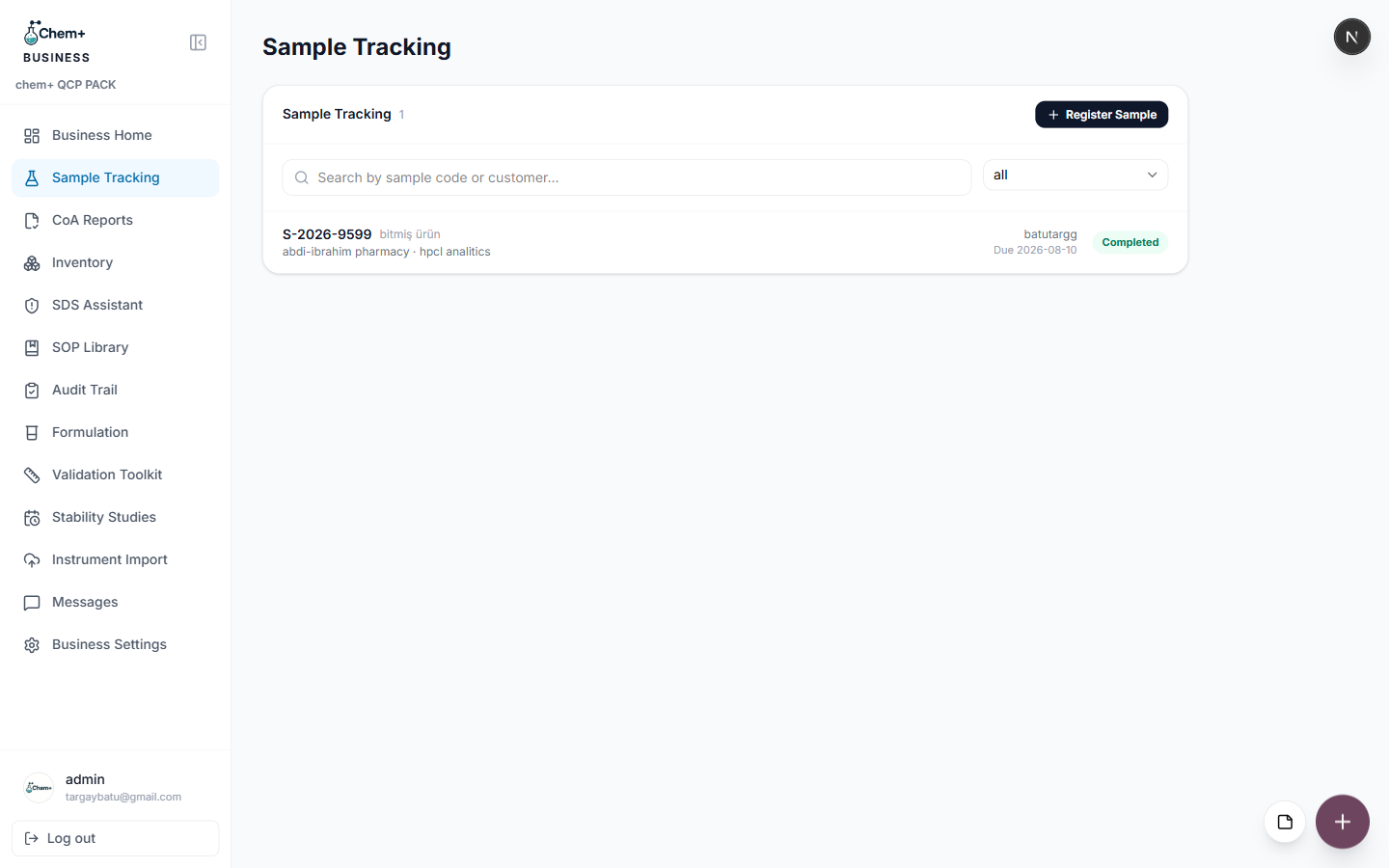
Sample Tracking is a registry that follows each sample through its life in the lab:
- A single, unambiguous record per sample, from intake onward, with its own sample code.
- Status that reflects where the sample actually is in the workflow — in progress, completed — not where a spreadsheet says it should be.
- The customer, the analysis type, and the due date attached to the sample, searchable in one place.
It's the backbone, not an island
Sample Tracking is most useful because of what connects to it. A CoA in CoA Reports can pull from a tracked sample. The Audit Trail records what happened to it. Inventory reflects what it consumed. The sample record becomes the thread that ties a result back to everything that produced it.
For a small QC lab or an R&D group that has outgrown spreadsheets but can't justify a full LIMS, that's the sweet spot: real traceability you'll actually keep using because it didn't take a quarter to roll out. Sample Tracking is included in ChemPlus Business.