Tips, updates, and stories from the Chem+ team
Everything about the Canvas, Calculators, Virtual Lab, ChemDraw, Miew 3D, and the Digital Lab Notebook — straight from the people building them.
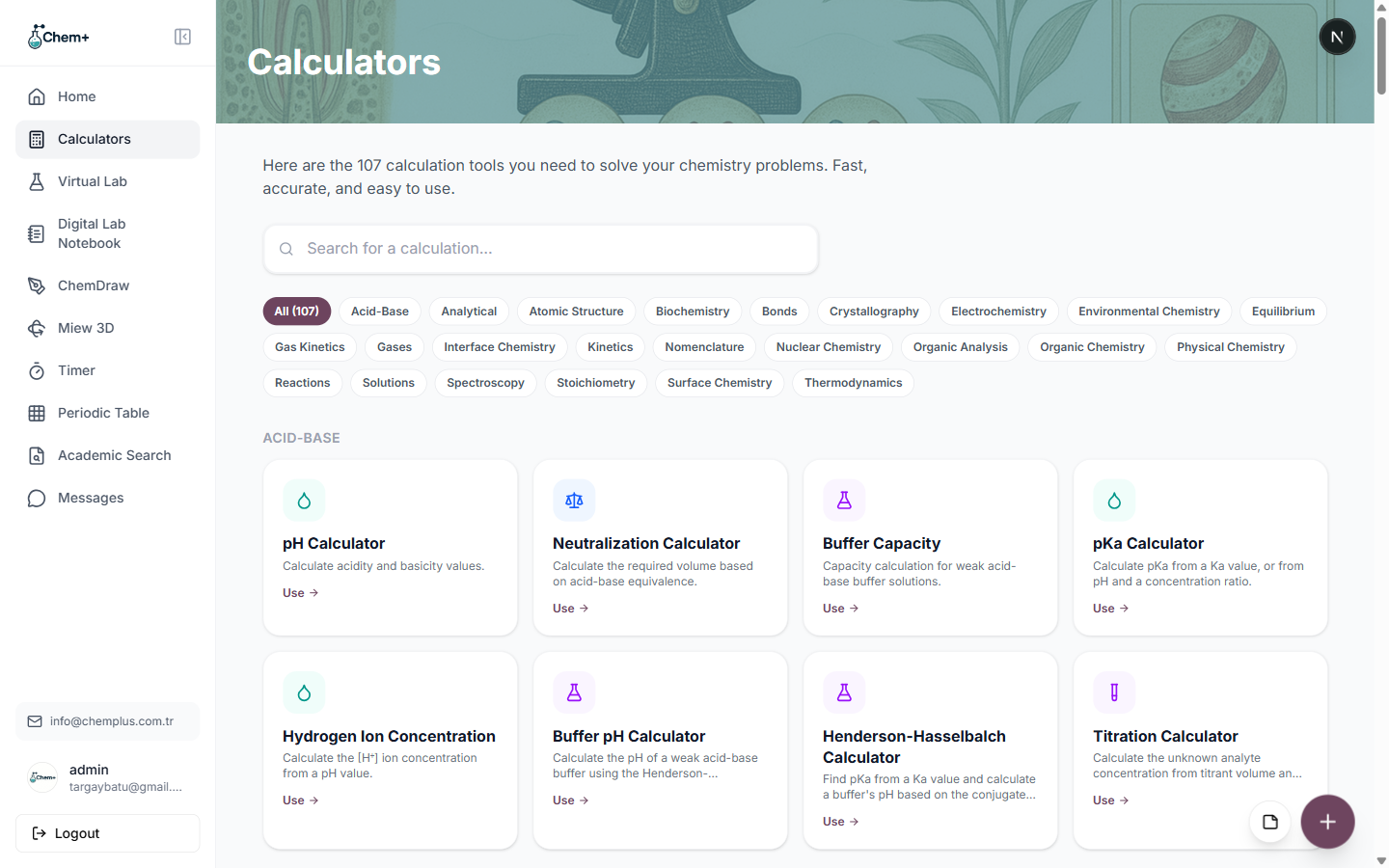
Which Analyses Rely on the Chem+ Calculators? From Water Testing to Titration
Map the calculators to the real analytical workflows they support — water quality, solution prep, acid-base titration, gas measurements, and the quantitative backbone of physical chemistry.
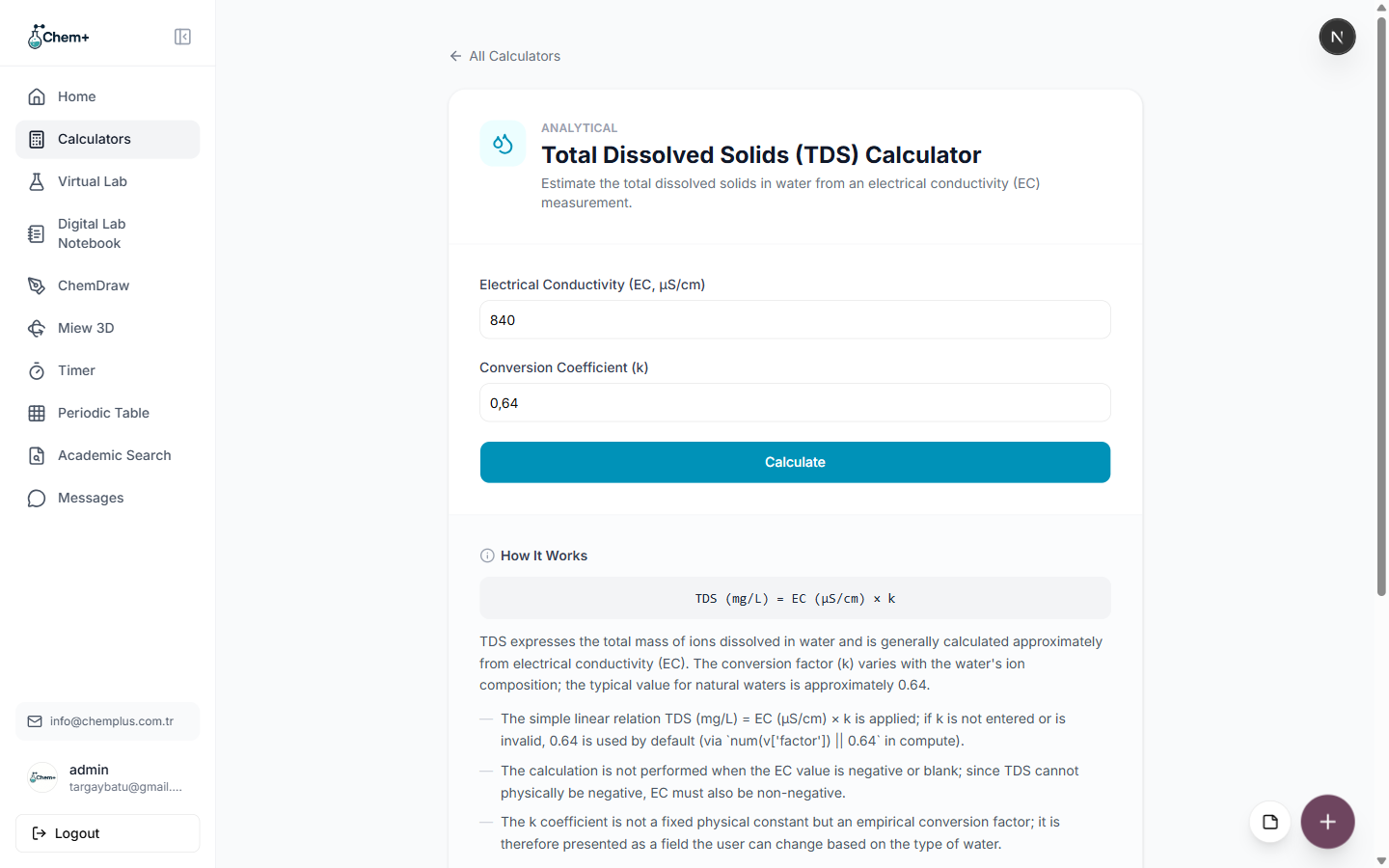
What Are the 107 Calculators Actually For? Real Jobs They Do
A calculator library is only as good as the problems it solves. Here's what the 107 Chem+ calculators are genuinely used for — by students, QC analysts, and researchers alike.
A Tour of Chem+'s 107 Chemistry Calculators
From stoichiometry to thermodynamics, here's a guided tour of the calculator library — 107 tools, organized by the chemistry you actually do, with the core set free on every account.
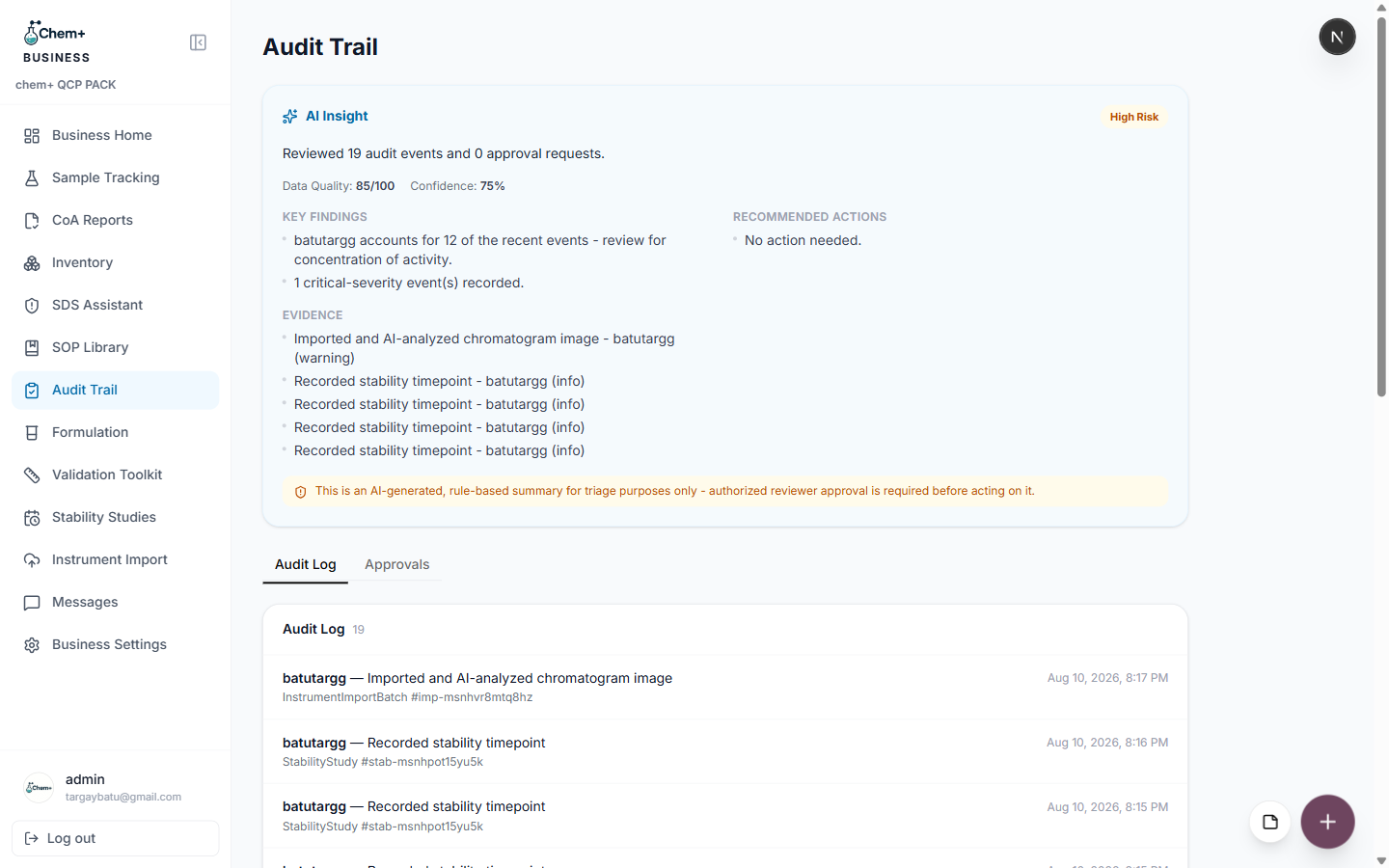
Audit-Ready by Default: The Business Audit Trail and E-Signatures
Who approved this, and when? With the Audit Trail module, that answer is a lookup — every change, approval, and e-signature is recorded automatically.
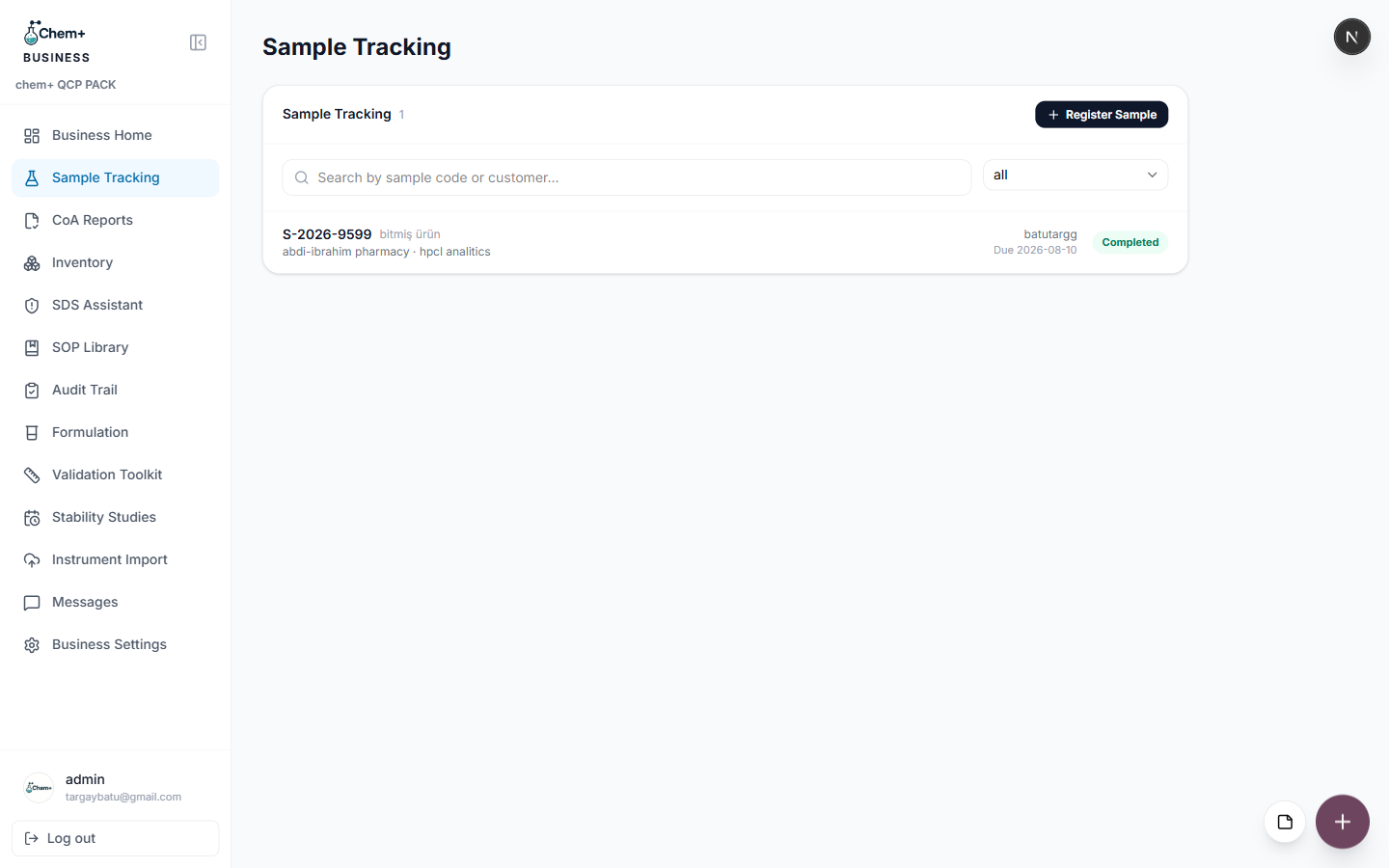
Sample Tracking: A LIMS-Lite That Actually Gets Used
Full LIMS platforms are powerful and often overkill. Sample Tracking gives smaller labs the traceability they need without the implementation project.
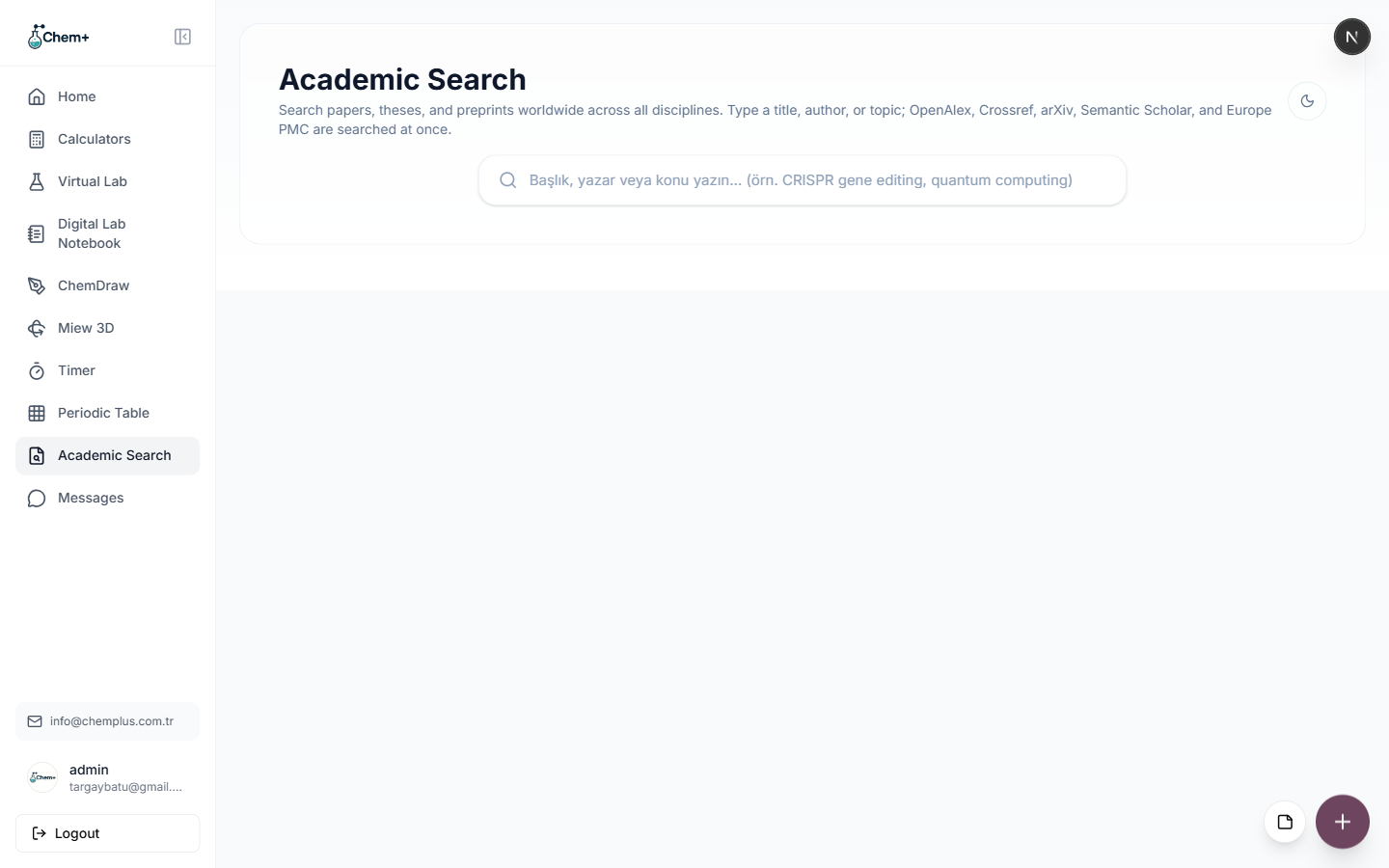
One Search, Five Databases: How Academic Search Works
Academic Search queries OpenAlex, Crossref, arXiv, Semantic Scholar, and Europe PMC at once — so a single query covers far more of the literature than any one of them alone.
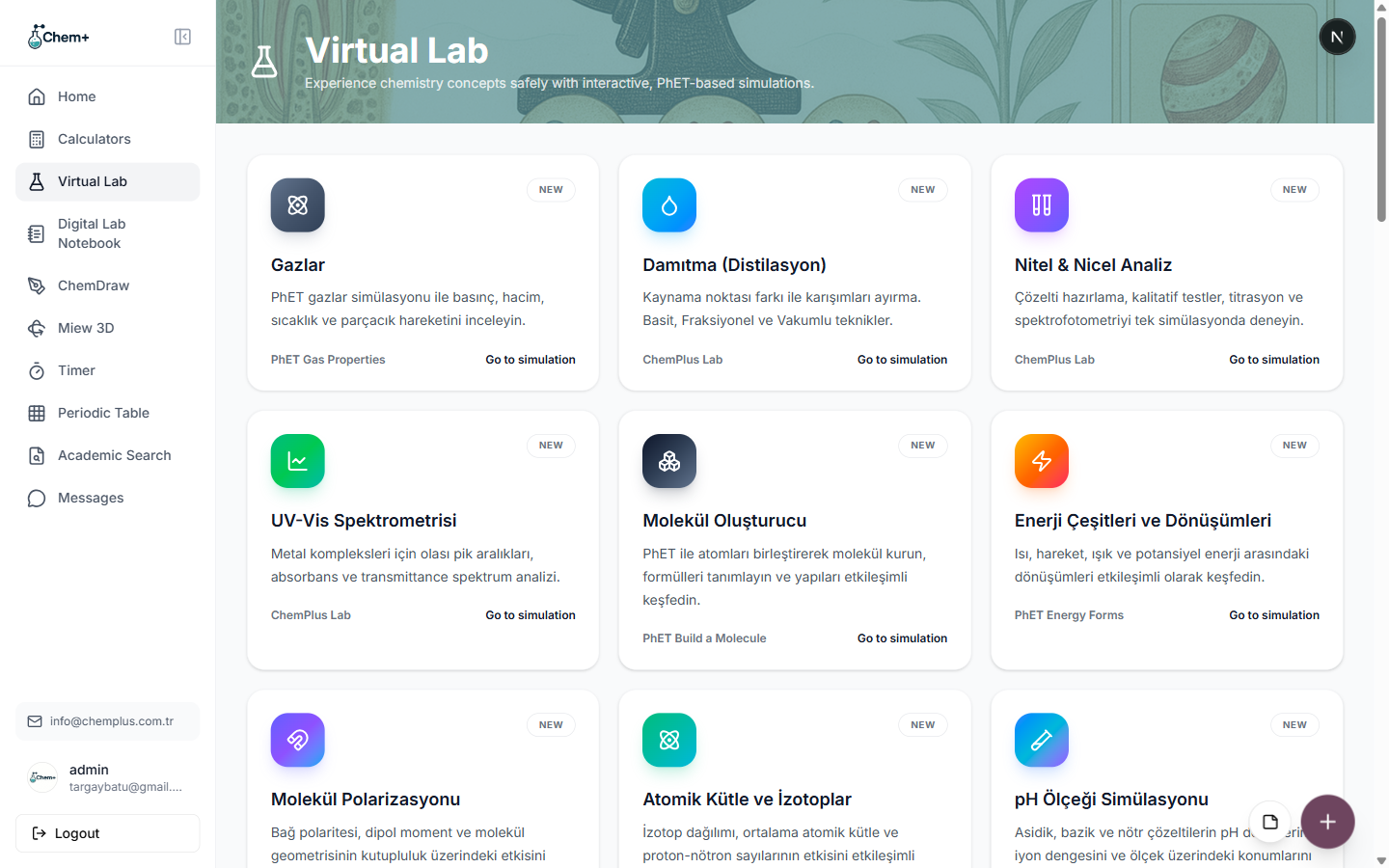
Why We Built Virtual Lab
Not every institution has lab time or equipment to spare. Virtual Lab gives students and researchers a safe place to test a procedure first.
Tracking Shelf Life: The Stability Studies Module
Shelf-life claims should rest on data, not guesses. Stability Studies tracks your studies against a timeline so expiry decisions are defensible.
Free, Pro, Team, or Business: Which Chem+ Plan Fits You
A plain-language guide to the four ways to use Chem+ — what each unlocks, who it's for, and what it costs — so you can pick without guessing.
Never miss an update
Get new tutorials and product news from the Chem+ team, straight to your inbox.